Written with create-ebook
Easy Italian Cooking for Everyday Meals
Simple recipes and techniques for bringing reliable Italian flavor to your weekday table
The sentence that was typed
“Cocina italiana fácil para el día a día”
Typed in Spanish · 9 chapters · 16 825 words
The plan it produced
- Set up an Italian kitchen that works on weekdays
- Learn the few techniques that make Italian food taste right
- Master quick pasta meals
- Cook sauces, soups, and beans ahead
- Make rice, gnocchi, and baked dishes without fuss
- Build simple Italian mains and vegetable sides
- Plan a week of Italian meals
- Avoid the mistakes that flatten everyday Italian food
- Keep cooking: create your own everyday Italian rotation
Chapter 1, in full
Set up an Italian kitchen that works on weekdays
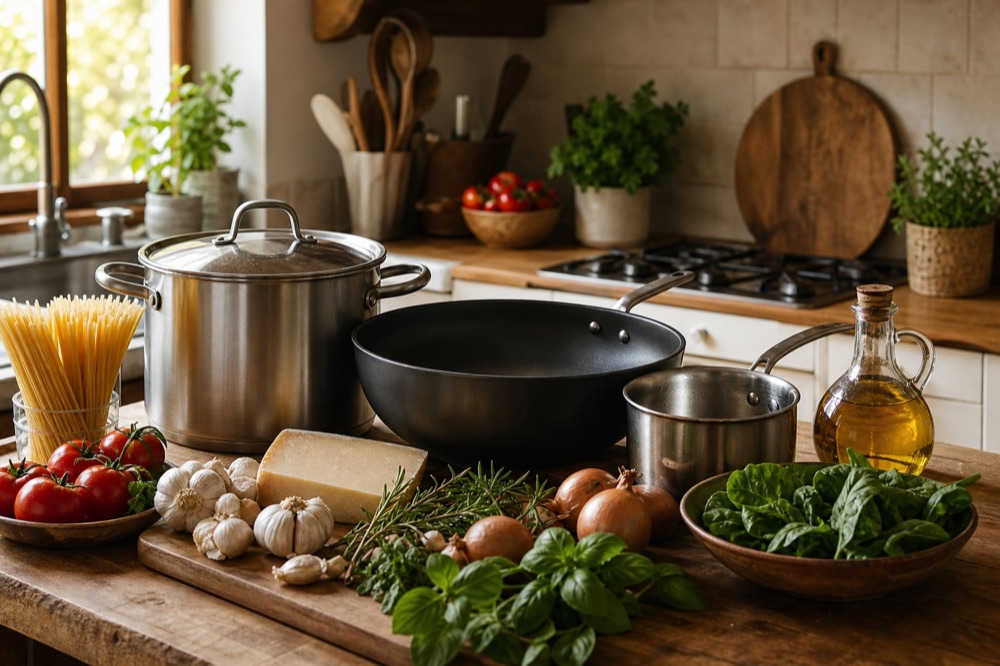
A weekday Italian meal starts before the stove is on. When pasta, tomatoes, cheese, and a few dependable vegetables are already in the house, dinner can begin with a decision as small as: pasta or eggs? Soup or roast vegetables? That is far more useful on a Tuesday than a cupboard full of ingredients bought for one ambitious recipe.
Set up for repetition rather than completeness. You do not need specialty tools or a pantry that resembles a delicatessen. You need a compact group of ingredients that combine easily, plus enough fresh food for the next several dinners. Build that base once, then refresh it with a short weekly shop.
Start with the tools that earn their space
Buy or clear space for eight pieces of equipment. They cover most everyday Italian cooking and prevent common bottlenecks, such as trying to drain pasta through a pot lid or browning vegetables in a crowded skillet.
- A large pot: Choose one that holds at least 6 quarts. Use it for pasta, beans, soup, and blanching greens. A heavy pot with a fitted lid is useful, though the lid does not need to be fancy.
- A wide frying pan: A 10- or 12-inch pan with highish sides is the workhorse. The broad surface lets onions soften evenly and gives pasta room to finish in sauce. A skillet that is too small steams food rather than browning it.
- A saucepan: A 2- to 3-quart pan handles a small pot of tomato sauce, reheating beans, or warming broth. It also saves you from washing the large pot for every small task.
- A rimmed sheet pan: Use a half-sheet pan, about 13 by 18 inches if your oven accommodates it. The rim contains juices from tomatoes, chicken, or squash. Line it with parchment when you want quick cleanup.
- A sharp chef’s knife: An 8-inch knife is enough for onions, herbs, vegetables, and meat. Keep it sharp. A dull knife slows preparation and crushes tomatoes or herbs instead of cutting them cleanly.
- A box grater or fine grater: The fine side turns Parmesan into a light, melting finish. The larger holes handle mozzarella or vegetables when needed. If you buy only one, a basic box grater is practical.
- A colander: Choose one large enough to drain a pound of pasta without spilling. A stable base matters more than a collapsible design.
- A wooden spoon: It is safe for nonstick cookware, sturdy enough for thick sauces, and easy to use when scraping up flavor from the bottom of a pan.
Add measuring spoons if you do not own them, especially for salt and dried herbs. Otherwise, resist adding gadgets until a repeated task proves you need one. A pasta machine, garlic press, and specialty baking dish can wait.
Build a pantry that can produce dinner
Stock the following items, then replace them as they run low. Start with modest quantities. A first pantry should make cooking easier, not turn into a shelf of expired jars.
- Dried pasta: Keep two shapes at first. Buy one long pasta, such as spaghetti, plus one short shape, such as penne or rigatoni. Keep 2 pounds total. Long pasta suits oil-based sauces and quick tomato sauces. Tubes hold chunky sauces well.
- Canned tomatoes: Keep two 28-ounce cans of whole or crushed tomatoes. Whole tomatoes give you the most control because you can crush them by hand or leave them coarse. Use one can for a sauce, then replace it on the next shop.
- Tomato paste: Buy a tube if possible. It keeps longer than an opened can and lets you squeeze out one tablespoon at a time. Cook it in oil for about a minute before adding liquid to deepen its flavor.
- Olive oil: Keep an everyday extra-virgin olive oil for cooking and finishing. You do not need a rare bottle. Choose one you enjoy on bread or vegetables, and store it away from light and heat.
- Garlic and onions: These belong in the pantry rather than the refrigerator. Keep one head of garlic and four to six onions. They form the starting point for sauces, beans, soups, and vegetable dishes.
- Dried herbs: Begin with oregano and red pepper flakes. Dried rosemary is useful if you cook potatoes or beans often. Buy small jars, since dried herbs lose their aroma over time.
- Vinegar: Red wine vinegar is the most flexible choice. It sharpens tomato sauces, dresses salads, and brightens cooked greens when a lemon is not available.
- Broth or stock: Keep a carton of low-sodium chicken or vegetable stock. Use it for soup, rice, and loosening a sauce. Low-sodium stock gives you control because Parmesan and canned foods already bring salt.
- Beans: Keep three cans, such as cannellini beans or chickpeas. They turn a vegetable soup into a meal and make a fast pantry supper with tomatoes and toast. Rinse canned beans unless the recipe benefits from the canning liquid.
- Rice: Keep 1 pound of a medium-grain rice, such as Arborio, if you plan to make risotto. If you mainly want an all-purpose side, use the rice your household already cooks.
- Flour: A small bag of all-purpose flour is enough for dusting, thickening, and simple doughs. Store it in an airtight container if your kitchen is warm.
- Breadcrumbs: Plain dried breadcrumbs make a fast crisp topping for pasta, vegetables, or fish. Toast them in olive oil until golden, then add a pinch of dried oregano.
- Canned fish: Keep two cans of tuna packed in olive oil, or use sardines if you prefer their stronger flavor. With pasta, garlic, and a lemon, canned fish makes a useful dinner when the refrigerator is nearly empty.
Label the shelf or basket where these ingredients live. Put the items you use most at eye level. Once a week, check pasta, tomatoes, beans, and olive oil. Add only what is missing to the shopping list.
Use the refrigerator for ingredients with several jobs
The refrigerator supplies the fresh richness that makes a sparse pantry feel like a meal. Keep a small amount of each item and use it across the week.
Eggs are the quickest main ingredient in the kitchen. Keep a dozen. They can become a soft scramble with herbs, a frittata with leftover vegetables, or eggs baked in a tomato sauce.
Parmesan or another hard grating cheese belongs in almost every weekly shop. Pecorino Romano, Grana Padano, and aged Asiago also work. Buy a wedge rather than pre-grated cheese when possible. It keeps longer, tastes fuller, and gives you a rind for soups. Wrap the wedge in parchment or wax paper, then place it in a loose bag or container. Grate only what you need.
Mozzarella gives you a different kind of meal: melted, mild, and quick. Buy one 8-ounce ball for pizza-style toast, baked pasta, or tomatoes. Fresh mozzarella should be used within a few days after opening. Low-moisture mozzarella lasts longer and melts well for weekday cooking.
Butter is useful in small amounts. Stir a tablespoon into a simple tomato sauce to soften its acidity, finish rice, or cook eggs. Keep it wrapped so it does not absorb refrigerator odors.
Lemons solve many last-minute problems. A squeeze wakes up beans, fish, roasted vegetables, and greens. Buy two each week. Zest a lemon before juicing if you want extra fragrance in breadcrumbs or pasta.
Leafy herbs, when available at a reasonable price, make simple food taste freshly made. Parsley is the most adaptable. Basil is excellent with tomatoes and mozzarella. Buy one bunch, wrap the stems in a damp paper towel, and refrigerate it in a loosely closed bag. Use herbs near the end of cooking, not at the start, so their flavor stays clear.
Choose vegetables by the work they do
Do not shop for vegetables as isolated recipe ingredients. Shop for roles. Choose one or two vegetables from each useful group, based on season and price. You will then have several meal options without buying fifteen unrelated items.
Aromatic bases begin a dish and make the kitchen smell like dinner is under way. Onions and garlic are the essentials. Add celery or carrots when you plan a soup, beans, or a longer-cooked sauce. Dice them small so they soften before the rest of the ingredients cook.
Quick-cooking greens make a fast pan of pasta, eggs, or beans feel complete. Buy spinach, arugula, chard, or broccoli rabe. Spinach wilts in two minutes. Chard needs its stems sliced and cooked first. Broccoli rabe benefits from a brief blanching before sautéing with garlic.
Roastable vegetables provide planned leftovers. Choose cauliflower, zucchini, peppers, eggplant, mushrooms, or winter squash. Roast a sheet pan at 425°F with olive oil and salt until browned at the edges. Most need 20 to 35 minutes, depending on size. Cook extra. Cold roasted vegetables can go into a frittata, a pasta sauce, or a lunch salad.
Salad ingredients give the table freshness with almost no cooking. Keep one crisp base, such as romaine, escarole, or mixed greens. Add a second item that holds well, such as radishes or cucumbers. Dress only what you will eat that night with olive oil, vinegar, salt, and a little Parmesan.
Aim for vegetables that can appear in more than one meal. A bunch of chard might be sautéed beside eggs on Monday, folded into beans on Wednesday, and added to soup on Friday. This is how fresh shopping remains economical.
Make one weekly list, then shop for a short runway
Choose four or five dinners before shopping. Do not assign every ingredient to a single recipe. Instead, buy a base that can shift when a night gets busy or leftovers appear.
Use this checklist after looking through the pantry and refrigerator:
- Replace core staples: Check pasta, canned tomatoes, beans, olive oil, and broth. Replace anything that will not cover the coming week.
- Choose two proteins or protein anchors: A dozen eggs already counts. Add canned fish, chicken thighs, or a second can of beans based on your plans.
- Buy one hard cheese and one fresh cheese: A 6- to 8-ounce wedge of Parmesan can cover a week for two people. Add an 8-ounce mozzarella only if you have a use for it in the next few days.
- Select vegetables by role: Buy onions and garlic if needed. Then choose one quick green, two roastable vegetables, plus one salad base.
- Add seasonal ingredients in a small amount: Buy what looks good and fits the week, such as a pint of cherry tomatoes, a bunch of asparagus, or two zucchini. One seasonal item is enough to keep the meals varied.
For a two-person household, a practical weekly cart might include 1 pound of pasta, one can of tomatoes, two cans of beans, a dozen eggs, a wedge of Parmesan, one bag of spinach, two zucchini, a head of romaine, lemons, and a loaf of bread. If the pantry is already established, this can support several dinners without an elaborate plan.
Put away groceries with a purpose. Keep onions and garlic in a cool, dark place with airflow. Refrigerate cheese and greens promptly. Place the vegetables you need first at the front of the refrigerator. When dinner arrives, the useful ingredients will be visible before the takeout menu is.
A working Italian kitchen gives you choices with very little preparation: pasta with tomatoes and cheese, beans with greens, eggs with roasted vegetables, or a salad beside a warm skillet dish. Keep the base steady, shop fresh in small amounts, and let the ingredients overlap. The next step is learning how heat, salt, and timing turn these ordinary supplies into food that tastes finished.
Key takeaways
- Buy eight reliable tools before considering specialty equipment, with a large pot and wide frying pan doing the most work.
- Keep a modest pantry of pasta, tomatoes, beans, olive oil, and supporting staples that can be replaced weekly.
- Use eggs, hard cheese, lemons, and a small amount of fresh cheese to make pantry meals feel complete.
- Shop for vegetables by their role, then choose only a small number of seasonal additions each week.
This is the book as it sits in the account that made it. The rest of the chapters are there too.